No Money Down
In another recent article, I discussed the peculiar relationship between disposability and affordability. A pillar of that relationship is that higher quality things are simply out of reach for most people. So could we address disposability by making higher quality items more accessible, or rethinking our ownership relationship with them?
Consumers, especially American ones, have an abundance of options to procure the objects they want or need (or just need right now). But it has led to a double life for most of us. On the one hand, we are defined by our relationships, our careers, our ambitions, and our experiences. On the other hand, in the eyes of those that own, sell, and rent products we want, we are defined by our roles as leasees, borrowers, or other forms of capital risk.
Seemingly without fail though some financial relationships get at best mixed reviews from financial advisors. Why is that? Why are certain types of relationships, whether lease-to-own, installment purchases, or consumer credit cards considered a bad deal? How could we make them better for both the consumer, as well as shift the furniture market towards thoughtful purchases to be cherished, even if only for a couple of years?
You get credit! You get credit! Everyone gets credit!
Credit is practically as old as money itself. Like, clay tablets old. “Open book” credit, or credit that vendors like butchers or grocers gave to their regular customers (“Hey Al, put it on my tab!”) and credit to farmers for seeds have a pretty long history as well.
Consumer credit for durable goods (as opposed to groceries, beer, etc) goes back further than most people guess, and it started with furniture. In 1807 the New York furniture firm Cowperthwait and Sons began selling on installments. Over the next century, Singer’s easy payments carried the practice around the world along with its sewing machines.
It wasn’t until the 1920’s interwar period that consumer credit as it we know it now really took off. One big reason for this? Mass production of a far wider range of durable goods.
The birth of modern advertising created the demand, but how were the producers going to get these goods into the hands of consumers who wanted them but didn’t have enough money to buy them?
Enter the installment plan, and the rise of sales financing companies to administer them. Suddenly furnishing that parlor or buying that Model T become dramatically easier. Thanks to similar financial innovations in housing (mortgages) and the regulatory system that evolved to support them, by the golden age of the American Dream more people in the U.S. had houses, garages, and a need to fill them with stuff.
Mass production was booming, as was the market for labor that could subsequently buy more stuff. Americans could buy almost anything in installments, having overcome the edifice of Protestant ethic of thrift and savings, and transitioning the economy to one that ran on debt.
The 1950s brought the greatest innovation of all, the credit card. Franklin National Bank of New York launched one of the first bank charge plans in 1951, and the bank networks that followed grew into Visa and MasterCard. A two-party deal between buyer and seller became a three-party one. The card network vouched for the buyer, so the seller had one less thing to worry about. The seller paid a fee on every purchase, and the buyer paid interest on whatever balance carried over.
Other ways of using or possessing an object from time immemorial persist, and new ways of using or possessing things proliferate. For those of us who can’t afford a house in the neighborhood where we want to live, or at least the down payment on one, we rent an apartment. And anyone who has purchased a car recently knows that leasing a vehicle for a set period of time and just bringing it back in after two or three years remains a very attractive option, even compared to the best rates offered by the dealership’s financing office.
Several new startups in recent years have shown us that everything from jewelry to ballgowns to even dogs can be rented when a lack of desire to own or some barrier, financial or otherwise, exists that prevents ownership outright.
Interestingly, some forms of rental or credit seem more desirable than others. This generally comes down to simple interest rates, repayment terms, or how credit scoring companies perceive one kind of debt vs. another (fixed term debt good, high balances on revolving credit bad).
The installment plan, one tap away
The biggest change since I first wrote this happened at the checkout. Buy now, pay later services split a purchase into four payments, usually with no interest. They started with big purchases like furniture. In 2025 DoorDash added Klarna’s plans, and now you can pay for takeout in installments. According to the CFPB, these loans grew from $2.2 billion in 2019 to $43.9 billion in 2023. Much of that borrowing never shows up on a credit report. Economists have started calling it phantom debt.
Meanwhile, American credit card balances reached a record $1.29 trillion this fall, according to the New York Fed. Headlines read steady spending as proof of a strong consumer, while much of this debt accrues to purchase essentials like groceries or fuel. And the averages hide who carries the weight. Over the past year, 10.3% of card balances in the poorest neighborhoods went seriously delinquent, more than double the rate in the wealthiest. Some households spend from strength. Others spend on credit they can’t see the bottom of. The official numbers can’t tell them apart.
Debt, responsibility, and the gray area in between
The business models that allow us to take possession of stuff, whether permanently or temporarily, have a social, environmental, and economic dimension. Could access to credit be a form of social good, rather than the mark of rampant consumerism that it seems like now?
One thing that gets lost in the conversations around access to credit, leasing, or affordable furniture is that the most egregious examples of abuse seem to overshadow real needs or advantages. For example, without credit access to nice or high quality stuff would be reserved for only the very rich. But the worst examples of affordability or credit seem to dissuade us from taking any risks to try alternatives to the safest, most conventional ways of possessing something.
Outrageous abuses of credit and the financial system that allowed people to buy atrocious McMansions doesn’t mean we don’t need housing, or couldn’t use some help getting access to it. We’d like to avoid the cycle of disposable IKEA furniture, but that doesn’t mean we don’t still need furniture, and preferably of decent quality.
So many of us are stuck in the middle, wanting to make responsible choices but left out from a system in which we can’t afford to participate.
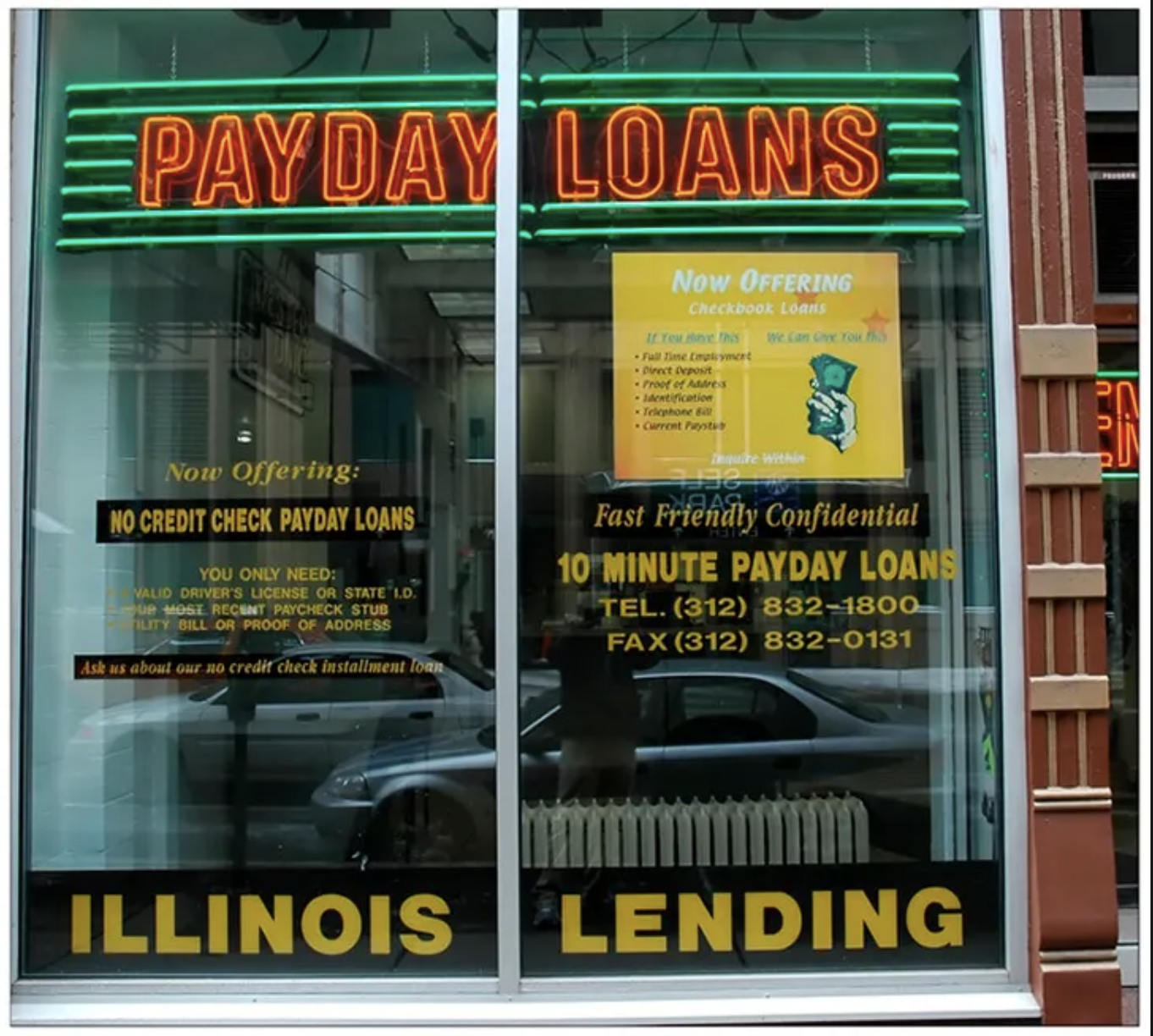
Leasing businesses exist for furniture, but the harsh reality is that they are no better than the payday loan businesses that pepper the most hard up communities in the country and that legislators continue to try and regulate. These businesses unashamedly target the poorest individuals in the country, often serving as a last resort for those with poor or no credit.
One version of this that’s not satanic, which many brick and mortar stores offer but few online retailers have yet to latch onto, is a lease-to-own model where the consumer gets the right of first refusal at the end of the lease term.
It’s a straightforward lease, but a percentage of the lease amount is set aside. At the end of the lease term the consumer has accrued a down payment that can be applied to the piece of furniture, or they can just walk away and end the lease. The furniture serves as the collateral of the agreement. An additional approach would be more conventional purchasing in installments, with a guaranteed buyback based on a set depreciation schedule.
We live in a complex world of financing options, leases, and everything in between, and pretty much everybody owes somebody something. It’s what makes the economic world go around. So can we leverage this system such that it generates value collaboratively, instead of redistributing wealth in the wrong direction?