Plastics on Parole
Plastic is the material we love to hate. But we can’t break our addiction (much though we may try). A catch-all term for what are known as (usually) synthetic polymers, plastics have done nothing short of make our modern life possible, for better and for worse.
But ironically, what began as an effort to find a replacement for scarce, naturally occurring resources has itself become a contentious centerpiece in the worldwide discussion around environmental sustainability and even a stand-in term for overconsumption, disposability, and artificiality.
Still, plastic’s future is still unwritten, despite the havoc it’s caused. For many industries, including home furnishings, smart uses of plastic, especially in new forms, could provide the basis for the material’s rebirth as the basis of sustainable manufacturing.
It all started with billiard balls. Yes, I’m totally serious.
In the 19th century, items like pianos and organs had become the must-have items for households wishing to have a certain quality of life. And among the upper classes (those who had room and money for it), billiard tables became equally as de rigeur. As one unknown wit once remarked, “A certain skill at billiards is the mark of a gentleman, but to play too well is the sign of a misspent youth.”
Unfortunately, the demand for the accompanying billiard balls caused a spike in the price for the ivory used to manufacture them, and a subsequent slaughtering of tens of thousands of elephants in resource poor areas of the world.
Even in the 19th century and prior to the norms of environmental protection that are mainstream today, observers quickly realized that unless an alternative to ivory could be found, elephants would soon become extinct. So billiard table manufacturers offered a prize to the first person who could come up with a suitable, inexpensive alternative to ivory.
John Wesley Hyatt answered the call. Working as a printer in New York state and without any engineering experience, Hyatt began tinkering in the shed behind his house with a blend of cellulose derived from cotton and camphor (p.s. highly unstable so never, ever do that).
The substance that resulted was nothing short of a revolution in human history: for the first time we weren’t restricted by naturally occuring materials like wood, stone, animal products, or metal and their accompanying limitations and scarcity. We could make our own. Hyatt’s brother called the resulting material celluloid, and the name stuck.
Hyatt’s celluloid was a raw, early version of what would come to be known later as “plastic”. It wasn’t even entirely synthetic. But it inspired a hoard of imitators that pushed materials science forward.
The most famous of these was Leo Baekeland, whose innovation Bakelite finally pushed plastics into the mainstream. Baekeland developed his material as an alternative to shellac, used as a glaze or finish and derived from the excretions of the female lac beetle (get it? she-lac?). The fluid’s manufacturing process required a tremendous amount of raw material from thousands of beetles and made it next to impossible to affordably meet demand.
Using, among other things, a by-product from burning coal, Baekeland created a substance that could be formed and, when heated, would harden into place. The world of manufacturing would never be the same, as shapes of all kinds were suddenly possible and could be mass produced through a process called compression molding. Bakelite could be found in home implements of all kinds, like electrical insulators, radios, and telephones.

For years though plastics remained a material that was thought of as a cheap, second-rate imitation of better, more authentic natural materials. Either that, or a substance reserved only for specific products like combs or dice. Entire towns dedicated themselves to the production of these items. However, as manufacturers learned how to use it, plastic made things possible that were never fabricated before.
World War II exploded growth, when the federal government began using plastics, which by then included things like nylon (an alternative to silk) and plexiglass, for a dizzying number of applications geared toward the war effort. The capacity for producing plastic items went through the roof, and those producing it, like DuPont, were going to be sure that once the war was over this new capacity would still translate into sales.
While obviously motivated by profit to a significant degree, their ambitions, even for the military, were laudable.
Seeking alternatives to scarce natural resources? Check. Developing a material that was less resource intensive to fabricate? Check. Creating products that were better suited to the task, lighter weight, and easier to manufacture than the alternatives? Check. Democratizing the marketplace and creating products that could be sold less expensively, and thereby provide greater access to more of the market? Check.
Looking only that these ambitions, you could rightfully suppose that the development of plastics represent the very epitome of progressivism and the promise of technology. So what went wrong?
Our Dystopian Present
Plastic waste has more than doubled worldwide since 2000, reaching 353 million tons a year by 2019, and almost half of it goes to landfill. Only 9% of it ever becomes plastic again, and recycled material made up just 6% of all the plastic produced that year, according to the OECD. The United States does worse still. An independent analysis put the American rate at 5 to 6% in 2021, and nobody can say with much authority what it is now. The EPA stopped publishing national waste figures after its 2018 count, which found 27 million tons of plastic entering American landfills in a single year. Then in 2025 the agency dismantled its research office and shed nearly a quarter of its staff. The country now measures its own trash less than it used to.
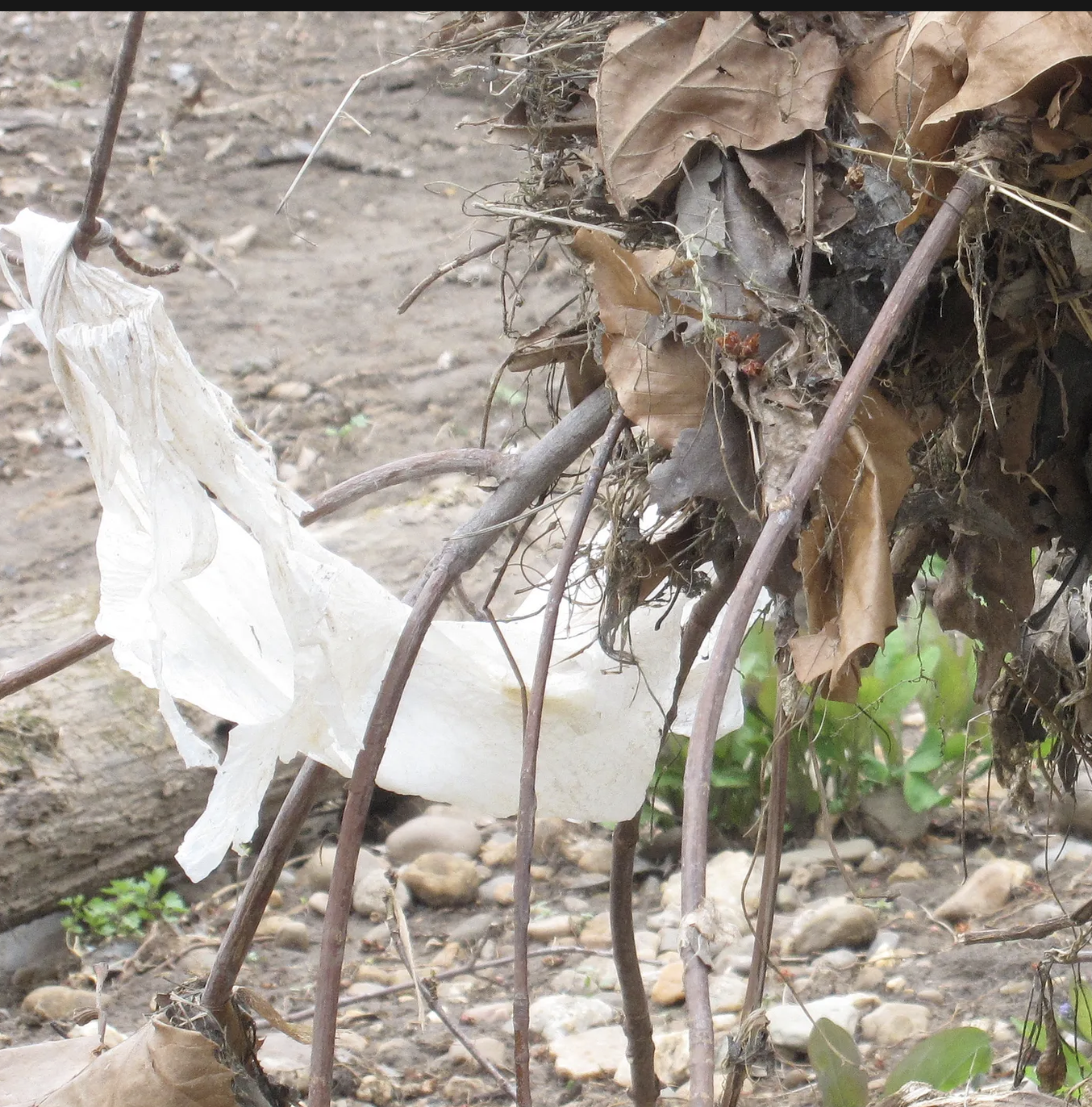
For those in my generation, much of the problem was here by the time we even arrived on the scene. As noted above, mass production made possible in part by advances in plastics, and seen as a boon to the “working man”, meant far, far more consumption per person than the world had ever seen. But that consumption came with a catch.
There were externalities that no one considered: the amount of waste (either in terms of energy in the creation process or once items were disposed of) that such a spike in consumption and a demand for convenience and low prices would bring about.
None of this happened by accident. Facing bans in the late 1980s, the plastics industry spent tens of millions of dollars telling the public that plastic could and should be recycled, while its own records, some reaching back to the 1970s, doubted recycling would ever work at scale. An NPR and Frontline investigation laid out the logic in a former industry chief’s own words: if the public thinks the recycling is working, it worries less. The little arrows on the bottom of the container did their job. They let us keep buying. In 2024 California sued ExxonMobil, alleging a half-century campaign of exactly this kind of deception.
Many of the most disposable furniture items rely on a mix of multi-density fiberboard or its cheaper cousin, particle board, covered in laminates made from, you guessed it, plastic.
In our modern age, our digital items have become as much a part of our spaces as our couches and tables, and almost all of these are housed in plastics. Furthermore, our single-use lifestyles extend into the bathroom, kitchen, and bedroom, in the form of packaging for items that we once bought to last.
But it’s not all bad news from the world of plastics, and plastics have unquestionably afforded us all a better quality of life in at least some regard. Sterile tools for healthcare and packaged foods ensure our safety. Clothing and textiles in our home last far longer and are significantly easier to clean when blended with synthetic fibers.
Every day to a greater extent, clever designers, inventors, and manufacturers are devising equally clever ways to use plastic in a way that achieves its initial promise and improves our lives without the harmful environmental debt we’ve accrued, which we will be unlikely to pay down in my lifetime (if ever). Will the promise ultimately mitigate that and even meet that promise of both material wealth and conservation?
Plastic has one real virtue. It lasts. That virtue only pays off when the thing made from it lasts too. A retired racing sail already carries its strength and its weave. Cut and stitched into a bag, it keeps doing work with no furnace in between. The fleece jacket made from bottles tells a different story. Almost all recycled polyester starts as drink bottles, according to reporting in The Conversation, and less than 1% of it comes from old textiles. The bottle leaves one of the few plastic loops that works and becomes a garment with nowhere to go next.
Circular design starts before the first cut. A good object can be opened and fixed. It comes apart cleanly when its first life ends. It favors one material over a laminate nobody can separate. Plastic built this way stops being a disposable thing and starts behaving like an heirloom. That was the hope of the Bakelite radio. It can be ours again, as long as we stop counting on the blue bin to absolve us.