Heirlooms, the Elephant in the Room
Baby boomers as a generation, quite frankly, have too much stuff. They came of age where the external trappings of success had a great deal more weight than they do now.
Much of this abundance intended to help “keep up with the Joneses” came at the expense of a lot of hidden externalities that we’re only reckoning with now.
The phenomenon of aging baby boomers attempting to downsize has gotten a ton of ink in the last few years.
Today, minimalism is far more in vogue. Grown children of the Boomer generation want nothing to do with hand-me-down home furnishings. Dining room sets, china, and family memorabilia often end up at Goodwill or an estate sale.
Objects that don’t sell don’t simply disappear, and regional economies are now awash with items that, while once treasured, will end up in a landfill.
Can the up-and-coming generation, with the aid of businesses with similar sensibilities, come to appreciate these objects through conservation and purchasing?
Before you decline that set of teacups, that steamer trunk, or even the chest of drawers, consider that these heirloom items have a lot of life left in them.
These pieces can play a key role in helping to fill your home with narrative, character, and a rich personal style.
Heirloom pieces can experience a rebirth, help to create truly unique spaces, and connect you to the place you live.
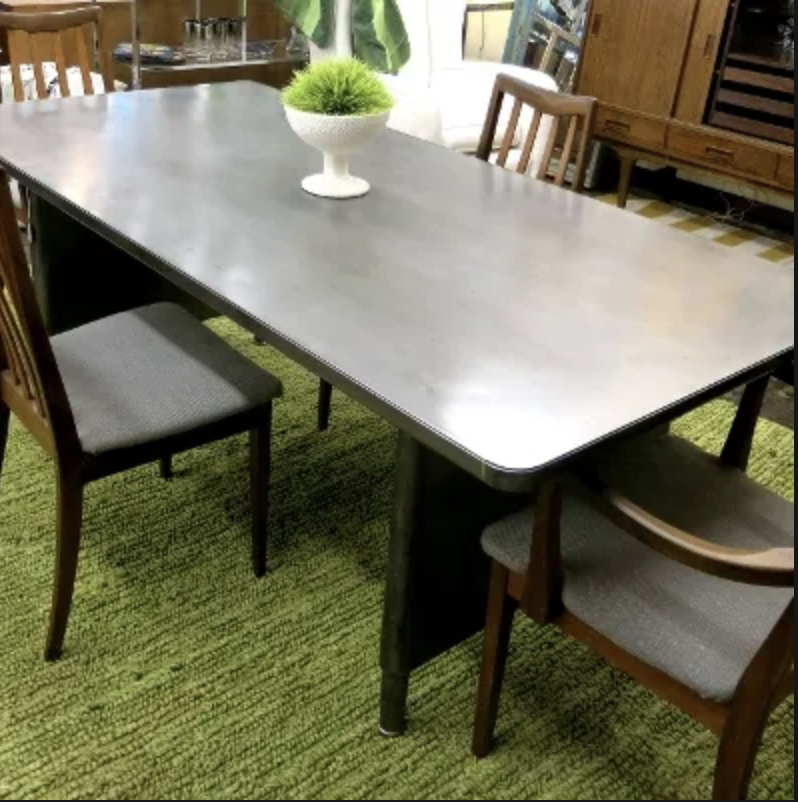
You have permission to modify an old piece. Love the table from your childhood home, but hate the dated or damaged brown stain? Redoing the surfaces on furniture is one of the most straightforward furniture transforming activities.
Grab a sander and redo the whole thing in a sexy, modern black, an off-the-wall orange, or a color that matches the accents in a room’s wallpaper.
Regardless of what the original designer had in mind, alterations are just a continuation of that piece’s story, and save it from an abrupt “The End.”
If it wasn’t for you, that piece would’ve ended up at the thrift store, or more likely, the trash. Some changes are reversible and maintain the piece’s value, others not so much.
Just because it was only for fancy stuff once, doesn’t mean it has to be now. China? Tea cups? Silver? Maybe your memories of using these items are limited to Christmas or the High Holy Days. But don’t let that stop you from using even the Lenox china as your day to day tableware.
(Before you scoff and say you aren’t into the vintage, hodgepodge look, bear in mind that most of these sets have anywhere between eight and twelve settings, meaning that there’s nothing hodgepodge about it.)
Consistency will make it seem intentional.
Who cares if you’re drinking Two-Buck Chuck out of the nice crystal? Bonus points if your kitchen features glass cabinets or French bistro style shelving for tableware storage, so you can show off those pieces that you’ll rarely use, like gravy boats and large serving platters.
Strike a balance between contemporary and heirlooms. Face it, your house is never going to look like a West Elm ad [author’s note: but why would you want it to?].
With the addition of heirlooms, you can mix your favorite pieces from today’s retailers with pieces that tell a story the moment you look at them.
Think of a great custom tuxedo with vintage cufflinks, or that perfect vintage dress made new with modern jewelry or hair style. By the same token, decking out a space entirely in heirlooms and vintage can look scattered and messy (and maybe just like your great aunt’s house, blech).
Just because you’re saying yes to the chest (of drawers) doesn’t mean you can’t be choosy.
Think about the whole space. Pick a few pieces you know you want to showcase and design around those. Be mindful of color, light, and texture in the process, and ensure that every room has a dominant feeling to bring things together.
Curate small objects by grouping them together. Have a sentimental object, like a statue, book of poetry, pocket watch, or baseball? Display it!
Use surfaces like mantels, coffee tables, and end tables to group together unique objects that tell a story.

For things like old photos or interesting documents, thoughtfully frame them and create a wall collage or turn those smaller pieces into a larger work of art.
Having them become a living, breathing part of your home is a million times better than shutting them away somewhere in a box, and is a very inexpensive way to add flourish to a space.
And don’t forget the flowers and decent dusting towel to keep everything looking fresh!
Learn (and tell) the stories behind the stuff. Stories, and the people behind them, are the most essential part of creating a home, even before you’ve added a stick of furniture.
Just like social networks, every object you use to furnish your home, especially heirlooms, has a story behind it. Not only in its provenance (who owned it, where it was in their home, where they got it), but the manufacturer, the materials, and the design.
Even that table that now has a black glossy finish came from a factory somewhere, and was made by another person who took pride in their work, and would be overjoyed that the results of their effort live on.
When guests arrive to your home to see unique pieces, they can sense something unique.
You’re a heartbeat away from a conversation that helps you share about yourself, your family, your connection to your place or region, your heritage, and your aspirations, far better than a Pinterest board.
Just as the farm-to-table movement helped to cultivate an appreciation for where our food comes from and the people behind it, the “social graph of furniture” is rich and complex.
We can design and consume with an understanding to where it will all go when we’re done with it.
This works on the level of cities or even regions as well. Can we make creative choices with what we have already, rather than buying something new for everything? The answer is a resounding yes, and not only that, it can help us to cultivate a truly personal style independent of trends, and a home that is not only a reflection of ourselves, but provides a sense of place.
So before you say no to that chair from mom, consider the possibilities! If you’re thinking of buying something new, consider visiting some vintage shops. Even if they aren’t your taste right now, that simply means they’re just waiting for their next chapter, as a part of the story that you’re creating in your home.